

Miva Integration

Miva integration bridges your ERP, ecommerce, CRM, and fulfillment systems into one connected environment. It streamlines order management, automates inventory updates, and keeps product data consistent across every channel — reducing errors and giving teams real-time visibility into operations.

Overview

Miva integration connects ERP with ecommerce, POS, accounting, and marketplace platforms, keeping information in sync across orders, products, and customers. It eliminates data silos and ensures your business runs smoothly from storefront to back office.

By automating everyday workflows and centralizing data, Miva integration cuts down on manual work and creates a clear view of your sales, inventory, and fulfillment in real time — helping your business move faster and smarter.

Preconfigured Miva integration solutions use secure APIs and cloud-based middleware to link ERP and ecommerce data without disruption. They adapt easily as your business grows, improving system reliability, accuracy, and overall scalability.

Join 500+ companies already growing

use cases

80%

Faster Order Processing Zero Manual Work

The Alluvia Platform has been a breath of fresh air and has simplified what used to be a challenging process for our team. The support during the implementation was much appreciated and I hope that we can work on more projects in the future.

Read Customer Story
question zone

Frequently Asked Questions

No answer to your question? You can write us your question and we will answer as soon as possible.

/ 01
How does Alluvia integrate with Miva?

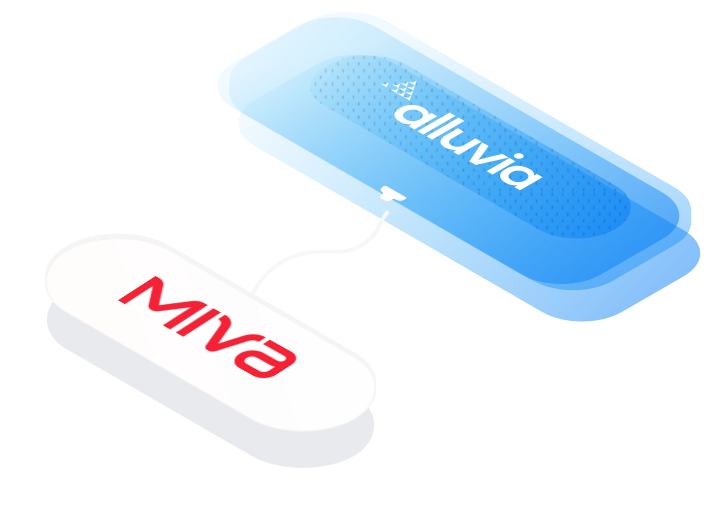
Alluvia connects directly to Miva’s REST and JSON APIs, automating the flow of orders, inventory, pricing, and customer data between your Miva store and ERP or fulfillment systems. This ensures that every transaction made online is instantly reflected across your business without manual updates.

/ 02
What Miva data can be synchronized with Alluvia?

Alluvia syncs orders, shipments, product data, pricing, customer information, and inventory levels between Miva and connected platforms. It also captures updates made in your ERP or warehouse systems to keep your storefront accurate in real time.

/ 03
How does Alluvia help manage complex product catalogs in Miva?

Alluvia simplifies catalog synchronization by automatically updating product names, SKUs, prices, inventory, and attributes from your ERP into Miva. This keeps multi-variant and configurable items consistent across channels, preventing listing errors or outdated product data.

/ 04
Can Alluvia integrate Miva with ERP and EDI systems at the same time?

Yes. Alluvia can connect Miva to multiple systems simultaneously – including ERP, CRM, and EDI trading partners – so your online orders, invoices, and fulfillment data move seamlessly through one automated workflow.

/ 05
How long does a Miva integration take to deploy?

Most Miva integrations are deployed in days, not months. Alluvia’s prebuilt workflows for order automation, inventory synchronization, and fulfillment tracking allow quick implementation without complex coding or middleware.

/ 06
What systems can Miva connect to through Alluvia?

Alluvia integrates Miva with SAP Business One, NetSuite, Acumatica, Microsoft Dynamics 365 Business Central, Microsoft Dynamics 365 Finance and Operations, Sage Intacct, and major EDI trading partners. It can also connect to Salesforce and HubSpot, giving you a unified data flow between sales, finance, and operations.

image alt
Get Started

Smart Solutions Start with Simplicity

Let us show you how quickly you can connect your ERP to ecommerce and marketplace systems using a simple drag-and-drop mapping interface powered by flexible integration architecture. Alluvia is a plug-and-play solution at a cost you can control.